
Manufacturing plants play an important role in industrial growth and economic development. Businesses need well-designed facilities to support production, manage equipment, store materials, and maintain smooth daily operations. A properly constructed manufacturing plant provides the foundation for efficient production, workplace safety, and future business expansion.
Choosing the right manufacturing plant construction company is an important decision for any business planning to establish a new manufacturing facility or expand an existing industrial unit. Experienced construction professionals understand industrial requirements and coordinate different stages of construction, from initial planning to final execution.
Infinity Infra provides industrial and civil construction solutions for businesses looking to develop functional, durable, and well-planned industrial facilities. With experience in industrial and residential construction, the company focuses on delivering construction solutions that meet project requirements.
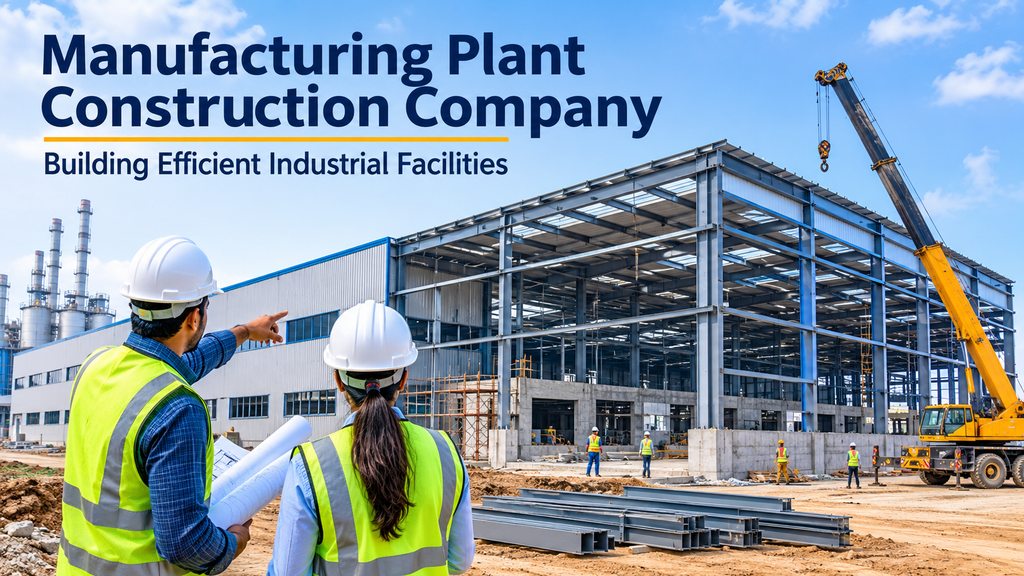
1. What Is Manufacturing Plant Construction?
Manufacturing plant construction involves designing and developing buildings and infrastructure where businesses manufacture products, process raw materials, and manage industrial operations.
Unlike ordinary commercial buildings, manufacturing facilities require specialised planning. The construction process must consider machinery installation, production layouts, structural strength, electrical systems, ventilation, safety requirements, and material movement.
A professional manufacturing plant construction company coordinates these requirements to create a facility that supports efficient industrial operations.
Manufacturing plant projects commonly include:
- Factory buildings and production units
- Industrial sheds and warehouses
- Raw material storage facilities
- Reinforced cement concrete (RCC) structures
- Steel structures and pre-engineered buildings
- Machinery foundations and equipment platforms
- Loading and unloading areas
- Administrative and office spaces
Each facility requires a construction approach based on its production activities, equipment, and operational needs.
2. Importance of Choosing the Right Manufacturing Plant Construction Company
Manufacturing plant construction involves significant investment, technical planning, and coordination. Selecting an experienced contractor can help businesses manage these requirements effectively.
Here are some important reasons to work with professional industrial construction experts.
Better Project Planning
Proper planning helps businesses organise construction activities, allocate resources, and establish realistic project timelines. Contractors coordinate different stages to maintain a systematic workflow.
Strong Structural Design
Manufacturing plants often accommodate heavy machinery, industrial equipment, and large storage systems. The building structure must meet engineering requirements and applicable safety standards.
Efficient Space Utilisation
A well-planned facility provides suitable space for production lines, machinery, storage, transportation, and employee movement.
Improved Project Coordination
Industrial construction requires coordination between architects, engineers, contractors, suppliers, and other professionals. Effective project management helps maintain consistency throughout construction.
Long-Term Durability
Quality construction materials and proper execution help create industrial facilities that can support long-term operations and reduce avoidable maintenance requirements.
3. Types of Manufacturing Plant Construction Services
A professional industrial construction company may provide different services depending on the project’s requirements.
Industrial Building Construction
Industrial building construction involves developing facilities for manufacturing, processing, assembly, and other industrial activities.
These buildings require suitable structural systems, functional layouts, and infrastructure to support production operations.
Factory Shed Construction
Factory sheds provide covered spaces for manufacturing activities, machinery installation, and material storage.
Steel structures and pre-engineered building systems are common choices for factory sheds because they can accommodate different industrial layouts.
RCC Construction
Reinforced cement concrete construction is widely used for foundations, columns, beams, slabs, and other structural components.
Proper RCC construction helps provide the structural strength required for industrial buildings and heavy-duty applications.
Warehouse Construction
Manufacturing businesses need organized storage facilities for raw materials, finished products, and equipment.
Warehouse construction focuses on storage capacity, accessibility, flooring requirements, ventilation, and material-handling operations.
Industrial Renovation and Expansion
Existing manufacturing facilities may require structural improvements, additional production space, or infrastructure upgrades.
Industrial renovation helps businesses improve their facilities without necessarily developing an entirely new plant.
4. Important Factors Before Starting Manufacturing Plant Construction
Before beginning construction, businesses should evaluate several important factors to ensure that the project meets operational and technical requirements.
1. Location and Site Selection
The location should support transportation, logistics, workforce accessibility, and the availability of essential infrastructure. Businesses should also review applicable land-use regulations and industrial development requirements.
2. Plant Layout and Space Planning
The plant layout should support smooth movement of raw materials, machinery, finished products, and employees. Proper planning can improve production efficiency and reduce unnecessary movement.
3. Structural Requirements
Engineers should assess soil conditions, foundation requirements, structural loads, and suitable construction materials before finalizing the building design.
4. Machinery and Equipment Planning
Manufacturing equipment influences building dimensions, foundation design, floor loading, electrical requirements, and ventilation systems.
5. Safety and Compliance
Construction projects should follow applicable building regulations, fire safety requirements, environmental guidelines, and industrial standards.
6. Budget and Timeline
A realistic project budget should include construction materials, labor, engineering, equipment-related infrastructure, approvals, and other project expenses.
5. Modern Construction Methods for Manufacturing Plants
Modern construction techniques help businesses develop industrial facilities according to their operational requirements.
Pre-Engineered Buildings (PEB)
Pre-engineered buildings use factory-manufactured structural components that are assembled at the construction site. They are commonly used for factory sheds, warehouses, and industrial buildings.
Steel Structure Construction
Steel structures offer design flexibility and are suitable for buildings that require large open spaces and specific structural configurations.
Reinforced Cement Concrete Construction
RCC construction is commonly used for foundations, columns, beams, floors, and other structural components that require appropriate strength and durability.
Sustainable Construction Practices
Businesses can also consider energy-efficient lighting, natural ventilation, rainwater harvesting, and suitable insulation to improve the environmental performance of manufacturing facilities.
The most appropriate construction method depends on the project design, site conditions, operational requirements, and budget.
6. Steps Involved in Manufacturing Plant Construction
A manufacturing plant construction project generally follows several stages.
Step 1: Initial Consultation and Requirement Analysis
The construction team understands the business requirements, production activities, site conditions, and project objectives.
Step 2: Planning and Design
Architects and engineers prepare building layouts, structural drawings, and other technical plans.
Step 3: Approvals and Documentation
The project team coordinates the necessary permissions, documentation, and regulatory requirements before construction.
Step 4: Foundation and Civil Work
Construction begins with site preparation, excavation, foundation development, and other civil engineering activities.
Step 5: Structural Development
The team develops the building structure using suitable RCC, steel, or pre-engineered building systems.
Step 6: Finishing and Infrastructure
Flooring, electrical installations, plumbing, ventilation, fire safety systems, and other required infrastructure are completed according to the approved project specifications.
Step 7: Final Inspection and Handover
The completed facility undergoes appropriate inspections before handover for the next stage of operational preparation.
7. Why Choose Infinity Infra for Manufacturing Plant Construction?
Selecting a dependable construction partner is essential for developing an industrial facility that meets business requirements.
Infinity Infra offers industrial, residential, and commercial construction solutions with a focus on quality, planning, and professional execution.
With experience in industrial construction, the company understands the importance of developing functional spaces that support manufacturing and industrial operations.
Reasons to consider Infinity Infra include:
- Experience in industrial and civil construction.
- Solutions for industrial buildings and factory sheds.
- Planning and execution based on project requirements.
- Knowledge of RCC and steel structure construction.
- Support for industrial construction and development work.
- Focus on quality, project coordination, and timely execution.
Whether you are planning a new manufacturing unit, factory shed, warehouse, or industrial building, choosing the right construction partner can help establish a strong foundation for your business.
8. Build Your Manufacturing Facility with the Right Construction Partner
A manufacturing plant is a long-term investment that directly supports business operations and production capacity. Every stage, from site selection and structural planning to construction and finishing, requires proper attention.
Working with an experienced manufacturing plant construction company helps businesses coordinate technical requirements and develop facilities suited to their industrial needs.
Infinity Infra provides construction solutions for industrial and manufacturing projects. With a focus on planning, structural quality, and execution, the company aims to support businesses in developing reliable industrial infrastructure.
If you are planning a new manufacturing plant or expanding an existing facility, connect with Infinity Infra to discuss your construction requirements.
Visit: https://infinityinfra.net/
Frequently Asked Questions (FAQs)
1. What does a manufacturing plant construction company do?
A manufacturing plant construction company manages the development of industrial facilities, including factory buildings, production units, warehouses, industrial sheds, and supporting infrastructure.
2. What factors should I consider before constructing a manufacturing plant?
Consider location, soil conditions, building design, machinery requirements, structural strength, safety regulations, project budget, and construction timelines.
3. Which construction methods are used for manufacturing plants?
Common construction methods include RCC construction, structural steel construction, and pre-engineered building (PEB) systems. The choice depends on project requirements and engineering design.
4. How long does manufacturing plant construction take?
The construction timeline depends on the building size, design complexity, site conditions, approval requirements, material availability, and project scope.
5. Why is industrial plant construction different from commercial construction?
Industrial plant construction requires specialised infrastructure for machinery, production processes, heavy loads, material handling, and industrial safety. Commercial construction generally focuses on offices, retail spaces, and customer-facing facilities.
6. Does Infinity Infra provide industrial construction services?
Infinity Infra offers industrial, residential, and commercial construction solutions, including industrial buildings and factory shed construction.
7. Why should I hire an experienced industrial construction contractor?
An experienced contractor can help coordinate technical planning, structural requirements, construction activities, material selection, and project execution.