
Industrial construction projects require proper planning, technical expertise, experienced professionals, and effective coordination. Whether you are developing a factory, warehouse, manufacturing facility, or industrial building, managing every stage of construction is essential for achieving the desired results.
Industrial project management services play an important role in ensuring that construction projects are completed efficiently, within the planned budget, and according to the required quality standards.
From initial planning and design to construction execution and final handover, professional project management helps businesses handle complex construction activities with greater confidence.
In this guide, we will explore the importance of industrial project management, its key responsibilities, and how professional management services can help businesses complete successful industrial projects.
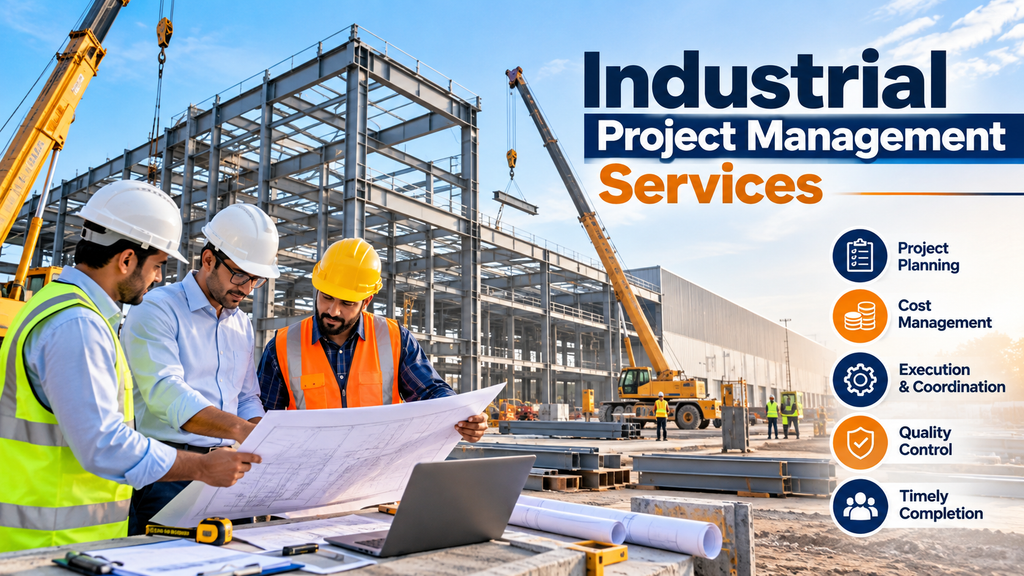
1. What Are Industrial Project Management Services?
Industrial project management services involve planning, organizing, coordinating, and supervising all activities related to industrial construction projects.
These services ensure that every project stage is properly managed, from the initial concept to completion.
Industrial project managers work closely with architects, engineers, contractors, suppliers, and clients to maintain smooth communication and efficient execution.
Common projects that require industrial project management include:
- Factory and manufacturing unit construction
- Industrial warehouse development
- Factory shed construction
- Pre-Engineered Building (PEB) projects
- Commercial and industrial buildings
- Structural steel construction
- Industrial facility development
With professional management, businesses can reduce construction challenges and achieve better project outcomes.
2. Importance of Professional Industrial Project Management
Managing an industrial construction project involves several technical and operational responsibilities. Without proper coordination, projects may experience delays, unexpected expenses, and quality-related problems.
Professional industrial construction project management helps businesses overcome these challenges.
Key benefits include:
Better Project Planning: A well-defined project plan establishes clear objectives, responsibilities, timelines, and construction requirements.
Cost Management: Proper budgeting and expense monitoring help control unnecessary costs and maintain financial discipline.
Timely Project Completion: Effective scheduling and coordination help ensure that construction activities progress according to the planned timeline.
Quality Control: Regular inspections and professional supervision help maintain construction quality and technical standards.
Risk Management: Identifying potential risks early helps prevent major construction problems.
Better Coordination: Communication between engineers, contractors, suppliers, and clients becomes more organized and efficient.
3. Key Stages of Industrial Project Management
Successful industrial construction requires a systematic approach. Each stage must be carefully managed to achieve the expected results.
How to Finance a Construction Project Right | Premier
Stage 1: Project Planning and Feasibility
The first step is understanding the client’s requirements, project objectives, available resources, and construction expectations.
Project managers evaluate site conditions, project scope, technical requirements, and estimated costs.
Proper planning creates a strong foundation for successful project execution.
Stage 2: Design and Engineering
Design and engineering are essential parts of industrial construction.
Architects and engineers prepare structural drawings, layouts, and technical specifications according to project requirements.
This stage focuses on:
- Building layout and space planning
- Structural design and calculations
- Material specifications
- Electrical and plumbing requirements
- Safety and operational considerations
Stage 3: Budgeting and Resource Management
Managing project finances is important for avoiding unnecessary expenses.
Project managers prepare cost estimates, allocate resources, and monitor construction expenses throughout the project.
They also coordinate the procurement of construction materials, equipment, and skilled workers.
Stage 4: Construction Execution
Construction execution is where the actual development work begins.
Activities may include site preparation, foundation work, structural development, steel fabrication, roofing, flooring, and other construction activities.
Experienced supervisors and engineers monitor the work to ensure that it follows approved drawings and project specifications.
Will Enterprise — Manufactured Certainty for Construction
Stage 5: Quality and Safety Management
Quality and safety are essential for every industrial construction project.
Regular inspections help identify construction defects and ensure that work meets applicable technical and safety requirements.
Project managers coordinate safety procedures, worker training, equipment inspections, and quality checks.
Stage 6: Final Inspection and Project Handover
The final stage includes project inspections, completion checks, documentation, and handover.
Before handing over the facility, the project team verifies that completed work meets the agreed project requirements.
A properly managed handover helps clients move towards their operational activities with confidence.
4. Why Choose an Experienced Industrial Project Management Company?
Choosing the right project management company can make a significant difference in the success of an industrial construction project.
An experienced company understands construction processes, engineering requirements, material selection, and site management.
Here are some important factors to consider when selecting a project management partner:
- Industry Experience: Look for a company with experience in industrial and commercial construction projects.
- Technical Knowledge: Ensure the team understands structural engineering, construction methods, and industrial building requirements.
- Project Coordination: Choose professionals who can manage contractors, suppliers, and site activities effectively.
- Budget Transparency: Select a company that provides clear cost estimates and regular project updates.
- Quality Standards: Check its approach to quality inspections and construction safety.
- Legal Compliance: Ensure the team understands applicable permissions, approvals, and regulatory requirements.
Working with experienced professionals helps businesses make informed decisions throughout the construction process.
5. Industrial Project Management for Factories and Warehouses
Factories and warehouses have specific construction requirements. Their designs must support daily operations, equipment installation, material movement, and future business expansion.
Professional industrial project management helps coordinate these requirements effectively.
For factory construction, important considerations include production layouts, machinery foundations, ventilation, electrical infrastructure, and structural strength.
For warehouse projects, planning focuses on storage capacity, loading and unloading areas, accessibility, flooring, and efficient movement of goods.
A well-managed project ensures that the completed facility supports the client’s operational needs.
How to Reduce Total Ownership Cost with a Steel Structure Warehouse—showhoobuilding.com
6. How Infinity Infra Supports Industrial Construction Projects
Choosing a reliable construction partner is an important step towards successful industrial development.
Infinity Infra and Realtors provides industrial, residential, and commercial construction expertise, supporting clients with construction planning, project coordination, and execution.
With experience in industrial building development and factory shed construction, the company focuses on delivering practical construction solutions based on project requirements.
Its areas of expertise include:
- Industrial building construction
- Factory shed construction
- Warehouse construction
- Structural construction
- Industrial and commercial development
- Project planning and execution
- Construction coordination
From initial planning to project completion, professional coordination and attention to quality help ensure a smooth construction process.
Businesses planning industrial construction projects can explore suitable solutions through Infinity Infra.
7. Future of Industrial Project Management
Industrial construction is continuously evolving with new technologies, modern building materials, and improved project management methods.
Digital planning tools, Building Information Modelling (BIM), project scheduling software, and improved construction techniques are helping professionals manage projects more effectively.
Modern industrial project management increasingly focuses on:
- Efficient construction methods
- Sustainable building practices
- Improved resource utilization
- Digital project monitoring
- Workplace safety
- Long-term building performance
Adopting modern project management practices helps businesses develop industrial facilities that meet present and future operational requirements.
Conclusion
Industrial construction requires careful planning, technical expertise, and effective coordination at every stage. Professional industrial project management services help businesses manage construction activities, control costs, maintain quality, and complete projects according to planned objectives.
Whether you are developing a factory, warehouse, industrial shed, or manufacturing facility, choosing an experienced construction and project management partner is essential.
Infinity Infra and Realtors focuses on industrial, residential, and commercial construction solutions, helping clients turn their construction requirements into well-planned projects.
Planning an industrial construction project?
Visit **https://infinityinfra.net/** to explore industrial construction solutions and discuss your project requirements with the team.
Frequently Asked Questions (FAQs)
1. What are industrial project management services?
Industrial project management services involve planning, coordinating, supervising, and controlling industrial construction projects from initial planning to completion.
2. Why is industrial project management important?
It helps businesses manage construction costs, maintain quality, reduce delays, coordinate resources, and complete projects efficiently.
3. What types of projects require industrial project management?
Factory buildings, warehouses, manufacturing facilities, industrial sheds, PEB structures, and commercial buildings commonly require professional project management.
4. What are the main stages of industrial project management?
The main stages include project planning, design and engineering, budgeting, resource management, construction execution, quality control, and final handover.
5. How can industrial project management reduce construction costs?
Proper budgeting, resource allocation, material planning, and expense monitoring help minimise wastage and avoid unnecessary construction expenses.
6. How do I choose the right industrial project management company?
Consider the company’s experience, technical knowledge, previous projects, project coordination capabilities, quality standards and understanding of legal requirements.
7. Does industrial project management include factory and warehouse construction?
Yes. It can include factory construction, warehouse development, industrial sheds, structural work, and other industrial infrastructure projects.