
Choosing the right civil contractor is one of the most important decisions when planning a construction project. Whether you are developing an industrial building, constructing a warehouse, building a factory, or planning a residential property, the contractor you select can significantly influence the quality, cost, safety, and timely completion of your project.
A professional civil contractor helps coordinate construction activities, manage materials and labor, follow approved plans, and maintain quality standards throughout the building process. However, selecting the right contractor requires careful research, proper planning, and an understanding of your project’s specific requirements.
In this guide, we explain how to select a civil contractor for your construction project and the important factors you should consider before making your final decision.
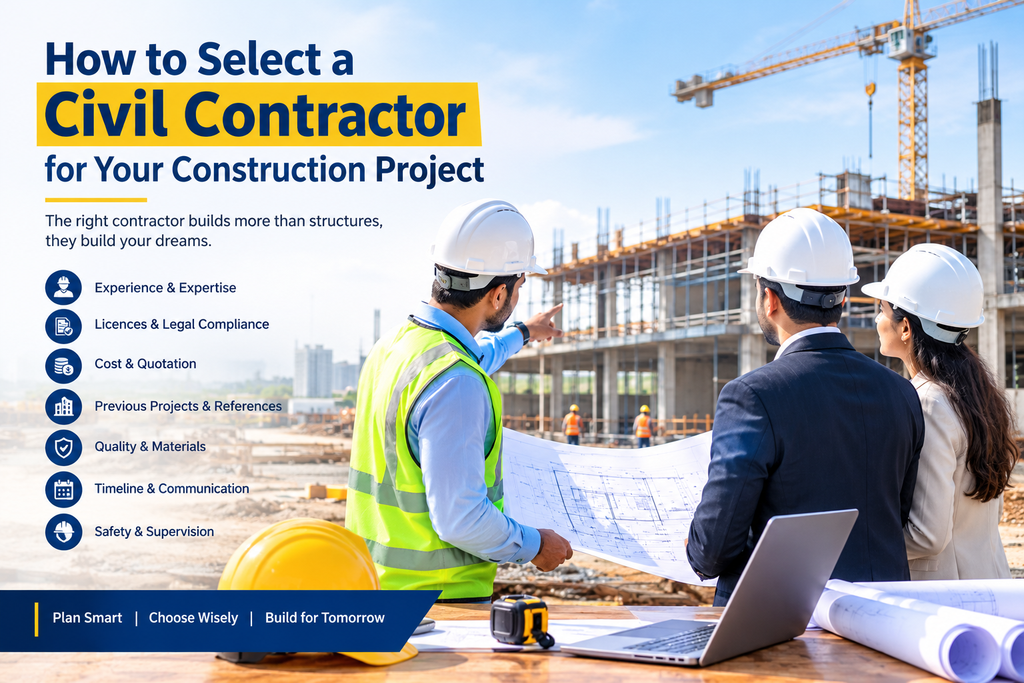
1. Understand Your Construction Project Requirements
Before hiring a civil contractor, clearly define your construction requirements. Every project has different technical needs, budgets, timelines, and design specifications.
For example, industrial construction may require specialized structural systems, heavy-duty flooring, and large working spaces, while residential construction focuses on comfortable layouts, durability, and functional design.
Start by identifying the type of construction work you need, the estimated project size, your budget, and your preferred completion timeline.
Important things to consider:
- Type and size of the construction project
- Architectural and structural requirements
- Estimated construction budget
- Required materials and specifications
- Project completion deadline
- Applicable permissions and approvals
Having a clear project plan helps you communicate your expectations and receive more accurate quotations from potential contractors.
2. Check the Contractor’s Experience and Expertise
Experience is an important factor when choosing a civil contractor. A contractor with relevant project experience is more likely to understand construction challenges, coordinate different teams, and manage work efficiently.
Before making a decision, review the contractor’s experience in projects similar to yours. If you are planning an industrial shed, warehouse, factory, or commercial building, look for experience in industrial and commercial construction rather than relying only on general construction experience.
Ask about previous projects, construction methods, project complexity, and the contractor’s role in completing each development.
Pro tip: Choose a contractor whose experience matches your project’s requirements. Relevant experience can help reduce avoidable errors and improve coordination during construction.
3. Verify Licenses, Documents, and Legal Compliance
Before appointing a civil contractor, verify the relevant business documents, registrations, licenses, and qualifications required for the proposed work.
Depending on the project and location, you may need to confirm applicable contractor registrations, professional credentials, building permissions, insurance arrangements, and other statutory requirements.
For industrial projects, check whether the proposed construction complies with the relevant land-use conditions, development regulations, and approval requirements.
Do not assume that hiring a contractor automatically covers every legal approval. The responsibilities of the owner, contractor, architect, and other professionals should be clearly defined.
Proper documentation helps establish accountability and reduces the risk of unnecessary disputes or regulatory complications.
4. Compare Construction Costs and Quotations
Budget planning is essential for every construction project. However, selecting a contractor based only on the lowest quotation can create problems if important work, materials, or services are excluded.
Request detailed written quotations from multiple contractors and compare their scope of work, material specifications, labor costs, project timelines, and payment schedules.
Your quotation should clearly explain which activities are included and which may incur additional charges.
Before finalizing a quotation, check:
- Material quality and specifications
- Labor and equipment charges
- Foundation and structural work
- Flooring, roofing, and finishing costs
- Electrical and plumbing work, where applicable
- Applicable taxes and additional expenses
- Payment milestones and variation charges
A transparent quotation helps you understand the actual project cost and reduces the possibility of unexpected expenses.
5. Evaluate Previous Projects and Client Reviews
A contractor’s previous work can provide useful information about their construction quality, project management, and attention to detail.
Ask to see photographs or visit completed projects where practical. Review the quality of workmanship, finishing, structural execution, and overall project delivery.
You can also request references from previous clients and ask about their experience working with the contractor.
Useful questions include:
- Was the project completed within the agreed timeline?
- Was the construction quality satisfactory?
- Were project costs communicated transparently?
- Did the contractor respond promptly to concerns?
- Was the work carried out according to the agreed specifications?
Independent feedback can help you make a more informed decision and identify potential concerns before signing a contract.
6. Check Project Management and Communication Skills
Successful construction requires coordination between the contractor, project owner, architect, structural engineer, suppliers, and workers.
A reliable civil contractor should communicate clearly, provide progress updates, and explain any delays or technical challenges.
Before starting the project, discuss how progress will be monitored, how changes will be approved, and who will be responsible for day-to-day supervision.
A clear communication process helps prevent misunderstandings and allows problems to be addressed before they affect the overall schedule.
Choose a contractor who is transparent, responsive, organized, and willing to explain the construction process.
7. Ensure Construction Quality and Material Standards
Construction quality directly affects a building’s durability, safety, and long-term maintenance requirements.
A professional civil contractor should follow approved drawings, engineering specifications, appropriate construction methods, and applicable quality standards.
Discuss the materials to be used, including cement, steel, concrete, roofing sheets, flooring materials, and other project-specific components.
For industrial buildings and warehouses, pay particular attention to foundation design, structural stability, floor load capacity, drainage, and roofing performance.
Quality checks should be carried out at appropriate construction stages. Material substitutions and design changes should be reviewed and approved by the responsible professionals before implementation.
Remember: Good construction quality is not simply about appearance. It also involves structural performance, safety, durability, and compliance with the approved design.
8. Confirm the Project Timeline and Payment Terms
A clearly defined construction schedule helps all parties understand their responsibilities and expected deadlines.
Ask the contractor to provide a realistic timeline covering site preparation, foundation work, structural construction, roofing, flooring, installations, and final finishing.
The schedule should account for factors such as weather, material availability, approval requirements, and site conditions.
Payment terms should be documented in the construction agreement. Payments can be linked to agreed milestones, with clear procedures for approving additional work or changes.
Avoid relying entirely on verbal promises. A written agreement provides clarity about the project scope, completion schedule, payment obligations, and responsibilities of both parties.
9. Prioritise Site Safety and Professional Supervision
Construction sites involve machinery, heavy materials, working at height, and other potential hazards. Appropriate safety arrangements are essential for protecting workers, visitors, and property.
Ask the contractor about site supervision, personal protective equipment, safe material handling, equipment maintenance, and procedures for managing construction risks.
Depending on the project, safety planning may also involve emergency access, fire prevention, temporary electrical installations, and coordination between different work teams.
Regular inspections and responsible supervision help maintain safer working conditions and support consistent construction quality.
10. Sign a Clear Construction Agreement
Before construction begins, ensure that all important terms are documented in a written agreement.
The agreement should define the scope of work, approved drawings, material specifications, project schedule, payment milestones, and procedures for handling changes.
It should also address responsibilities for approvals, site access, quality inspections, defects, delays, and handover documentation.
Review the agreement carefully and seek professional advice where necessary, particularly for large industrial, commercial, or residential projects.
A clear contract helps establish mutual expectations and provides a practical reference throughout the construction process.
Important Things to Remember When Selecting a Civil Contractor
Here are the essential points to check before hiring a construction professional:
- Experience: Look for relevant experience in similar construction projects.
- Credentials: Verify applicable licenses, registrations, and professional qualifications.
- Budget: Compare detailed quotations instead of focusing only on the lowest price.
- Quality: Confirm material specifications and quality control procedures.
- References: Review previous work and speak with past clients when possible.
- Communication: Choose a contractor who provides clear and regular updates.
- Timeline: Agree on realistic deadlines and progress milestones.
- Safety: Check site supervision and construction safety arrangements.
- Documentation: Record the scope of work, payment terms, and responsibilities in writing.
- Compliance: Confirm that applicable approvals and regulatory requirements are addressed.
Why Choose an Experienced Civil Construction Company?
Working with an experienced civil construction company can make the construction process more organised and manageable. Professional project coordination helps bring together planning, materials, labour, engineering requirements, and site execution.
For industrial and commercial projects, selecting a contractor familiar with the intended building type is particularly important. Warehouses, industrial sheds, factories, and commercial facilities often require different structural arrangements and operational considerations.
Infinity Infra and Realtors can be considered for industrial and civil construction requirements in Navi Mumbai and surrounding areas. Before appointing any construction company, discuss your project scope, review relevant experience, verify credentials, and request a detailed quotation.
The goal is to select a construction partner who understands your requirements and can deliver work according to the agreed specifications, budget, and schedule.
Conclusion
Selecting the right civil contractor is an essential step towards a successful construction project. From checking experience and comparing quotations to verifying documents, reviewing construction quality, and signing a clear agreement, every decision contributes to a more organised building process.
Take the time to research your options, ask the right questions, and evaluate contractors based on their experience, transparency, technical capabilities, and professionalism.
Whether you are planning a residential building, commercial property, industrial shed, or warehouse, the right contractor can help turn your construction plans into a practical and durable structure.
Plan carefully, choose professionally, and build with confidence.
Frequently Asked Questions (FAQs)
1. How do I choose the right civil contractor for my project?
Identify your project requirements, check the contractor’s relevant experience, verify credentials, compare detailed quotations, review previous projects, and sign a clear written agreement.
2. What documents should I check before hiring a civil contractor?
Depending on the project, check relevant business registrations, contractor licences, professional qualifications, insurance documents, references, and other required credentials.
3. Should I select the contractor who offers the lowest price?
Not necessarily. Compare the complete scope of work, material specifications, quality standards, payment terms, and project schedule. A very low quotation may exclude important activities or use different specifications.
4. Why is a written construction agreement important?
A written agreement establishes the scope of work, costs, payment milestones, responsibilities, timelines, and procedures for managing changes or disputes.
5. How can I check a civil contractor’s construction quality?
Review previous projects, inspect workmanship where possible, ask for client references, and confirm the quality control procedures that will be followed during construction.
6. What should I discuss with a civil contractor before construction begins?
Discuss your requirements, approved drawings, construction materials, project budget, completion schedule, required approvals, site safety, payment terms, and handover arrangements.