Industrial sheds play an important role in modern manufacturing and industrial development. Whether you are planning a new factory, expanding an existing manufacturing unit, or developing a warehouse, choosing the right industrial shed contractor is essential for a successful project.
A well-designed industrial shed provides sufficient working space, structural strength, safety, and long-term durability. It also helps businesses improve productivity and manage their operations efficiently.
However, selecting experienced industrial shed contractors for factory construction requires careful consideration of several factors, including construction quality, materials, engineering expertise, project management, and overall costs.
In this guide, we will explore the importance of industrial shed construction, the services contractors provide, and how to choose the right construction partner for your factory project.
1. What Is Industrial Shed Construction?
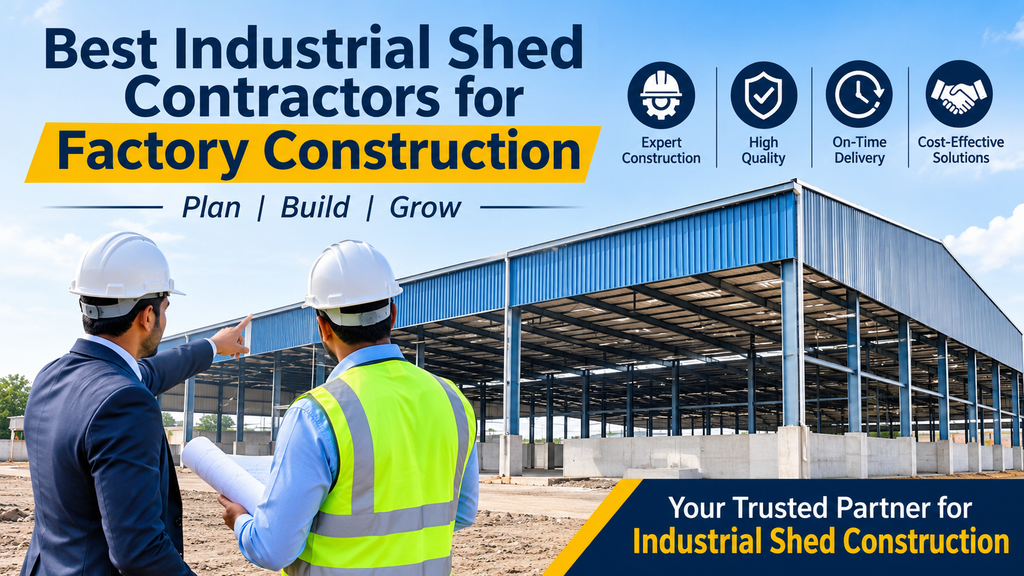
Industrial shed construction involves designing and building large structures used for manufacturing, storage, processing, and other industrial activities.
These structures are generally built using steel frameworks, metal roofing sheets, concrete foundations, and other durable construction materials.
Industrial sheds are designed to provide large, open spaces with fewer internal columns. This allows businesses to install machinery, arrange production lines, store materials, and manage industrial operations comfortably.
Common applications include:
- Manufacturing factories
- Warehouses and storage facilities
- Industrial workshops
- Production units
- Engineering facilities
- Logistics and distribution centers
- Commercial industrial spaces
Professional contractors ensure that every structure meets the project’s functional, engineering, and safety requirements.
2. Why Choose Professional Industrial Shed Contractors?
Industrial shed construction requires specialized knowledge, technical expertise, and proper project planning. Hiring experienced contractors helps ensure that the building is suitable for its intended purpose.
Here are some important advantages.
Quality Construction
Professional contractors follow suitable engineering practices and construction standards. They select appropriate materials and ensure proper installation to achieve a strong and reliable structure.
Efficient Project Management
Experienced contractors manage different construction activities, including planning, material procurement, fabrication, installation, and final inspection.
Proper coordination helps reduce delays and keeps the project organized.
Cost-Effective Solutions
A knowledgeable contractor helps select suitable construction materials and structural designs according to the project budget.
Proper planning can reduce unnecessary expenses and prevent costly modifications during construction.
Improved Safety
Industrial buildings require proper structural stability, ventilation, fire safety provisions, and suitable access arrangements.
Professional contractors consider these requirements during the design and construction process.
3. Types of Industrial Sheds for Factory Construction
Different industries require different types of industrial structures. Selecting the right shed depends on the factory’s operations, available space, and future expansion plans.
Pre-Engineered Building (PEB) Sheds
Pre-engineered buildings use factory-manufactured structural components assembled at the construction site.
They are suitable for warehouses, manufacturing units, and industrial facilities. PEB structures can offer faster installation and flexible design options.
Steel Structure Industrial Sheds
Steel structure sheds are widely used because of their strength, durability, and ability to cover large spaces.
They are suitable for heavy industrial applications, workshops, and manufacturing facilities.
Fabricated Industrial Sheds
Fabricated sheds use customized steel components manufactured according to project specifications.
They provide flexibility in design and can accommodate specific industrial requirements.
Warehouse and Storage Sheds
These sheds are designed to provide organized storage areas for raw materials, finished products, machinery, and inventory.
Their design considers loading requirements, vehicle movement, ventilation, and storage capacity.
4. Important Factors to Consider Before Hiring Industrial Shed Contractors
Choosing the right contractor is one of the most important decisions in any factory construction project.
Consider the following factors before making your decision.
Industry Experience
Look for contractors with experience in industrial shed and factory construction. Review their previous projects to understand their technical capabilities and construction quality.
Technical Expertise
Industrial shed construction requires knowledge of structural engineering, steel fabrication, roofing systems, foundations, and building requirements.
Choose a contractor who understands these technical aspects.
Quality of Materials
The quality of steel, roofing sheets, foundations, fasteners, and protective coatings directly affects the structure’s performance.
Always discuss material specifications before starting construction.
Project Timeline
Factory construction projects require proper scheduling and coordination.
Ask contractors about estimated completion timelines, project milestones, and workforce availability.
Legal Documentation and Approvals
Industrial construction may require land-related documentation, building permissions, environmental clearances, fire safety approvals, and other statutory requirements depending on the location and project.
Choose a contractor who can guide you through the required documentation and coordinate the relevant processes.
5. Step-by-Step Process of Industrial Shed Construction
A successful industrial shed project requires proper planning and execution.
The major construction stages include:
Step 1: Site Inspection and Planning
The contractor evaluates the site, available space, soil conditions, access roads, and project requirements.
Step 2: Structural Design
Engineers prepare structural drawings according to the building dimensions, intended usage, loading conditions, and applicable safety standards.
Step 3: Foundation Work
Foundation construction begins after the necessary soil investigation and engineering design. Proper foundations support the building structure and transfer loads safely.
Step 4: Steel Fabrication
Steel components are fabricated according to approved structural drawings and specifications.
Step 5: Structural Installation
Fabricated steel members are transported to the site and assembled using suitable equipment and installation methods.
Step 6: Roofing and Cladding
Roofing sheets, wall cladding, ventilation systems, and other required components are installed.
Step 7: Final Inspection
The completed structure is inspected to check construction quality, safety provisions, and compliance with approved project requirements.
6. How Much Does Industrial Shed Construction Cost?
The cost of industrial shed construction depends on several factors. There is no fixed price because every factory project has different structural, functional, and site requirements.
Important cost factors include:
- Total construction area
- Steel quality and quantity
- Foundation and soil conditions
- Structural design and building height
- Roofing and wall cladding materials
- Electrical and ventilation requirements
- Labor and transportation expenses
- Government approvals and documentation
Additional requirements such as overhead cranes, specialized flooring, fire protection systems, and heavy machinery foundations can also affect the total project budget.
Before finalizing a contractor, request a detailed quotation covering materials, labor, fabrication, installation, and other project-related expenses.
7. Benefits of Hiring an Experienced Industrial Construction Company
Working with an experienced industrial construction company provides several advantages throughout the project.
A professional construction partner can manage multiple activities under one coordinated process, helping businesses avoid unnecessary complications.
Key benefits include:
- Better construction planning and execution
- Efficient utilization of available space
- Reliable structural design
- Quality material selection
- Proper project coordination
- Reduced construction delays
- Better preparation for future expansion
For businesses planning factory development in Navi Mumbai and nearby industrial areas, selecting a contractor familiar with local industrial requirements can also make project coordination easier.
8. Why Choose the Right Industrial Shed Contractor for Your Factory?
Your factory building is a long-term investment. Poor construction planning or incorrect material selection can lead to maintenance issues, operational difficulties, and additional expenses.
The right contractor understands your business requirements and provides suitable construction solutions.
Look for a company that offers industrial construction, steel fabrication, factory shed development, project management, and support with relevant documentation.
A reliable construction partner focuses on quality, safety, transparency, and timely project execution.
9. Conclusion
Choosing the best industrial shed contractors for factory construction is essential for developing a durable, functional, and efficient industrial facility.
From structural planning and steel fabrication to roofing, installation, and final inspection, every construction stage requires professional attention.
Before selecting a contractor, evaluate their experience, previous projects, material quality, technical knowledge, and project management capabilities.
The right construction partner can help transform your industrial requirements into a well-planned facility that supports your business operations and future growth.
Looking for reliable industrial shed construction services in Navi Mumbai?
Infinity Infra and Realtors specialises in industrial, residential, and commercial construction, including factory sheds and industrial buildings. With 25 years of industry experience, the company focuses on delivering practical construction solutions tailored to project requirements.
Visit **https://infinityinfra.net/** to explore construction services and discuss your industrial project requirements.
Frequently Asked Questions (FAQs)
1. What do industrial shed contractors do?
Industrial shed contractors handle the planning, designing, fabrication, and construction of industrial sheds for factories, warehouses, workshops, and manufacturing facilities.
2. Which materials are commonly used for industrial shed construction?
Steel structures, metal roofing sheets, concrete foundations, wall cladding, and protective coatings are commonly used.
3. How long does industrial shed construction take?
The construction timeline depends on the shed size, design complexity, site conditions, material availability, and approval requirements.
4. What is the difference between a PEB shed and a conventional steel shed?
PEB sheds use pre-engineered and factory-manufactured components, while conventional steel sheds may involve more project-specific structural design and fabrication.
5. How do I choose the best industrial shed contractor?
Check the contractor’s experience, completed projects, engineering capabilities, material quality, safety practices, quotations, and project management approach.
6. Can industrial sheds be customised for specific factory requirements?
Yes. Industrial sheds can be customised according to factory dimensions, machinery requirements, storage needs, ventilation, loading conditions, and future expansion plans.
7. Are industrial shed contractors responsible for approvals?
Some contractors provide assistance with drawings, documentation, and approval coordination. However, the exact responsibilities depend on the contract and applicable local regulations.