
Industrial flooring plays an important role in maintaining the safety, efficiency, and durability of factories, warehouses, and manufacturing facilities. Unlike ordinary residential floors, industrial floors must withstand heavy machinery, continuous vehicle movement, equipment loads, chemical exposure, and daily operational activities.
Choosing experienced industrial flooring contractors helps businesses develop strong, long-lasting floors that meet their operational requirements. A properly designed and installed industrial floor improves workplace safety, reduces maintenance costs, and supports smooth business operations.
In industrial areas such as Navi Mumbai, where manufacturing units, warehouses, and commercial facilities continue to develop, the demand for reliable industrial flooring solutions is increasing.
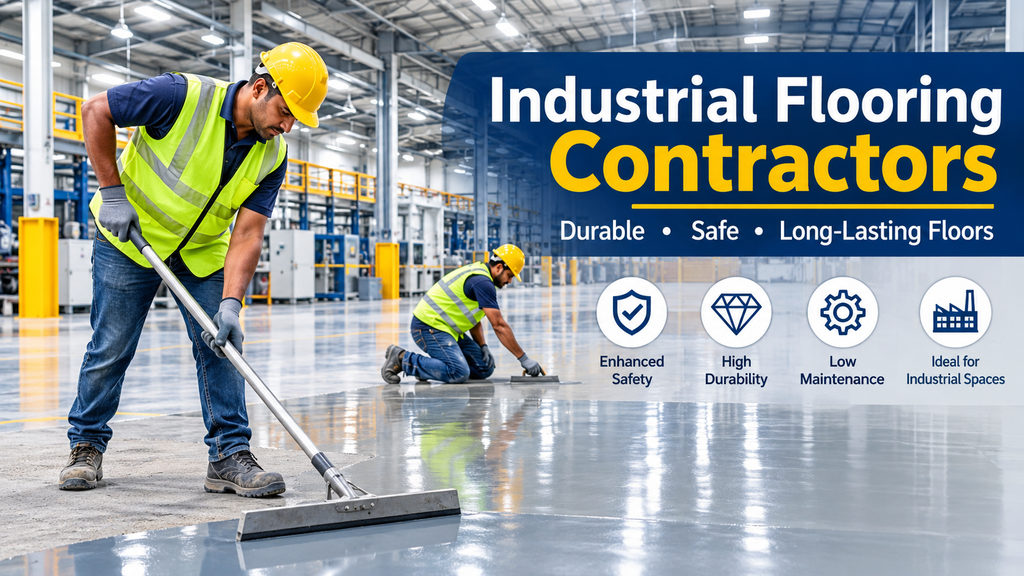
1. What Is Industrial Flooring?
Industrial flooring refers to specially designed flooring systems used in factories, warehouses, workshops, production units, and other industrial facilities.
These floors are constructed using durable materials and suitable installation techniques to handle demanding working conditions.
Industrial flooring systems are designed to provide:
- High load-bearing capacity.
- Resistance to heavy machinery and equipment.
- Durability against daily industrial activities.
- Resistance to chemicals, oils, and moisture.
- Safe and slip-resistant working surfaces.
- Easy cleaning and maintenance.
Professional industrial flooring contractors evaluate the site conditions and recommend suitable flooring materials based on the facility’s requirements.
2. Importance of Hiring Professional Industrial Flooring Contractors
Industrial flooring requires proper planning, technical knowledge, and quality construction practices. Poor flooring installation can result in cracks, uneven surfaces, surface damage, and expensive repairs.
Professional contractors understand industrial requirements and follow suitable construction methods to achieve reliable results.
Here are some important benefits of hiring experienced contractors:
Better Durability: Professional installation creates strong flooring systems that can withstand heavy industrial activities and regular usage.
Improved Workplace Safety: Properly finished floors help reduce the risk of slips, trips, and other workplace accidents.
Reduced Maintenance Costs: High-quality flooring materials and installation methods reduce frequent repair requirements.
Suitable Load-Bearing Capacity: Contractors select appropriate flooring specifications based on machinery weight, storage requirements, and vehicle movement.
Efficient Project Execution: Experienced contractors coordinate materials, labor, equipment, and construction activities to complete projects efficiently.
3. Different Types of Industrial Flooring Solutions
Different industrial facilities require different flooring systems. The right choice depends on operational activities, environmental conditions, expected loads, and maintenance requirements.
A. Industrial Concrete Flooring
Concrete flooring is one of the most widely used solutions for factories, warehouses, and manufacturing units.
It offers strength, durability, and the ability to support heavy machinery and industrial equipment. Contractors can use suitable concrete grades, reinforcement, and finishing techniques according to structural requirements.
B. Epoxy Industrial Flooring
Epoxy flooring provides a smooth, seamless, and durable surface. It is commonly used in manufacturing facilities, laboratories, workshops, and areas where cleanliness is important.
Its major advantages include:
- Chemical and stain resistance.
- Easy cleaning and maintenance.
- Smooth and attractive finish.
- Improved surface protection.
C. Heavy-Duty Industrial Flooring
Heavy-duty flooring is suitable for facilities that handle heavy machinery, industrial vehicles, and large equipment.
These flooring systems require proper thickness, reinforcement, concrete specifications, and load calculations to provide the required strength and performance.
D. Industrial Warehouse Flooring
Warehouse flooring must support storage racks, forklifts, material-handling equipment, and continuous movement.
A properly constructed warehouse floor provides a stable surface and supports efficient storage and logistics operations.
E. Anti-Slip Industrial Flooring
Anti-slip flooring improves safety in areas where water, oil, or other substances may create slippery conditions.
It is commonly used in production areas, workshops, processing units, and other industrial workplaces.
4. Important Factors to Consider Before Installing Industrial Flooring
Selecting the right flooring system requires careful consideration of several factors.
Load-Bearing Requirements: Understand the weight of machinery, storage racks, vehicles, and other equipment that will operate on the floor.
Type of Industrial Activity: Manufacturing units, warehouses, food-processing facilities, and workshops have different flooring requirements.
Flooring Material: Choose concrete, epoxy, or another suitable flooring system based on the project’s technical and operational needs.
Surface Preparation: Proper cleaning, levelling, and preparation help improve flooring quality and installation performance.
Drainage and Moisture: Consider water exposure, drainage requirements, and moisture conditions before selecting flooring materials.
Maintenance Requirements: Select a flooring system that offers suitable durability and manageable maintenance costs.
5. Industrial Flooring Installation Process
A professional industrial flooring project follows a systematic process to achieve quality and durability.
- Site Inspection: Contractors inspect the site, understand project requirements, and evaluate existing ground conditions.
- Planning and Design: The team determines the flooring type, material specifications, thickness, reinforcement, and installation method.
- Surface Preparation: Workers prepare the base by cleaning, levelling, and addressing necessary surface defects.
- Material Selection: Contractors arrange suitable concrete, reinforcement materials, epoxy products, and other construction materials.
- Floor Installation: The construction team completes the flooring work according to the approved specifications and project requirements.
- Finishing and Curing: Workers complete the required surface finishing and curing processes to achieve the desired performance.
- Final Inspection: Contractors inspect the completed floor to check its surface quality, finishing, and compliance with project specifications.
6. Why Industrial Flooring Quality Matters for Businesses
Industrial flooring directly affects the performance and productivity of a facility. Uneven or damaged floors can create difficulties for forklifts, material-handling equipment, and workers.
Quality flooring helps businesses maintain efficient operations while protecting equipment and stored materials.
It also supports better workplace organization, easier cleaning, and safer movement throughout the facility.
For warehouses and manufacturing units, investing in suitable industrial flooring can provide long-term operational benefits.
7. How to Choose the Right Industrial Flooring Contractors in Navi Mumbai
Finding the right contractor is an important step in any industrial construction project.
Before selecting an industrial flooring contractor, consider the following points:
- Check previous industrial flooring projects and experience.
- Evaluate technical knowledge and construction capabilities.
- Ask about material quality and installation methods.
- Check whether the contractor understands industrial load requirements.
- Discuss project timelines and estimated costs.
- Confirm the availability of skilled workers and site supervision.
- Review the project scope and quality standards before starting work.
Businesses in Navi Mumbai should choose contractors who understand local industrial construction requirements and can coordinate flooring work with other construction activities.
8. Why Choose an Experienced Industrial Construction Company?
Industrial flooring projects often require coordination with foundations, structural construction, drainage systems, and other civil engineering activities.
Working with an experienced industrial construction company can simplify project coordination and help maintain consistent construction quality.
Infinity Infra provides industrial, residential, and commercial construction services, including factory sheds and industrial building projects. With experience in industrial construction, the company focuses on planning, project execution, and meeting client requirements.
For businesses planning new industrial facilities or upgrading existing premises, selecting the right construction partner is an important step towards achieving reliable results.
Conclusion
Industrial flooring is an essential part of every factory, warehouse, and manufacturing facility. Strong and properly installed floors improve safety, support heavy equipment, and contribute to efficient industrial operations.
Choosing professional industrial flooring contractors in Navi Mumbai helps businesses select suitable materials, follow proper installation methods, and achieve durable flooring solutions.
Whether you are developing a new factory, constructing a warehouse, or upgrading an existing industrial facility, investing in quality industrial flooring can deliver long-term value.
Looking for industrial construction solutions in Navi Mumbai? Contact Infinity Infra to discuss your industrial construction requirements and project needs.
Website: https://infinityinfra.net/
Frequently Asked Questions (FAQs)
1. What do industrial flooring contractors do?
Industrial flooring contractors plan, prepare, install, and finish flooring systems for factories, warehouses, manufacturing units, and other industrial facilities.
2. Which flooring is best for industrial facilities?
Concrete flooring is suitable for heavy-duty industrial applications, while epoxy flooring is useful in areas requiring chemical resistance, easy cleaning, and a smooth surface. The right choice depends on operational requirements.
3. How long does industrial flooring last?
The lifespan depends on material quality, installation methods, maintenance, loading conditions, and daily usage. Properly designed and maintained industrial floors can provide long-term performance.
4. Is epoxy flooring suitable for factories?
Yes. Epoxy flooring is suitable for many factories because it provides a smooth, durable, and easy-to-clean surface with good resistance to various chemicals.
5. How much does industrial flooring cost in Navi Mumbai?
Industrial flooring costs depend on the floor area, material selection, thickness, surface preparation, reinforcement, and project complexity. A site inspection helps determine an accurate estimate.
6. Why is concrete flooring popular in warehouses?
Concrete flooring offers strength, durability, and suitable load-bearing capacity when properly designed and constructed. It is widely used in warehouses that handle heavy storage systems and industrial vehicles.
7. How do I choose the best industrial flooring contractor?
Check the contractor’s experience, previous projects, material quality, technical knowledge, installation methods, project timelines, and ability to meet your industrial requirements.