
Industrial cranes play an important role in manufacturing plants, warehouses, construction sites, factories, and other industrial facilities. They help businesses lift, move, and transport heavy materials safely and efficiently. However, regular crane inspection and testing are essential to ensure reliable performance and prevent workplace accidents.
Industrial crane testing services help businesses evaluate crane performance, identify potential defects, and verify that lifting equipment operates safely under working conditions. Professional testing also helps companies maintain safety standards, reduce equipment downtime, and extend the lifespan of their cranes.
Whether you operate an overhead crane, gantry crane, tower crane, or EOT crane, regular testing is an important part of industrial equipment maintenance.
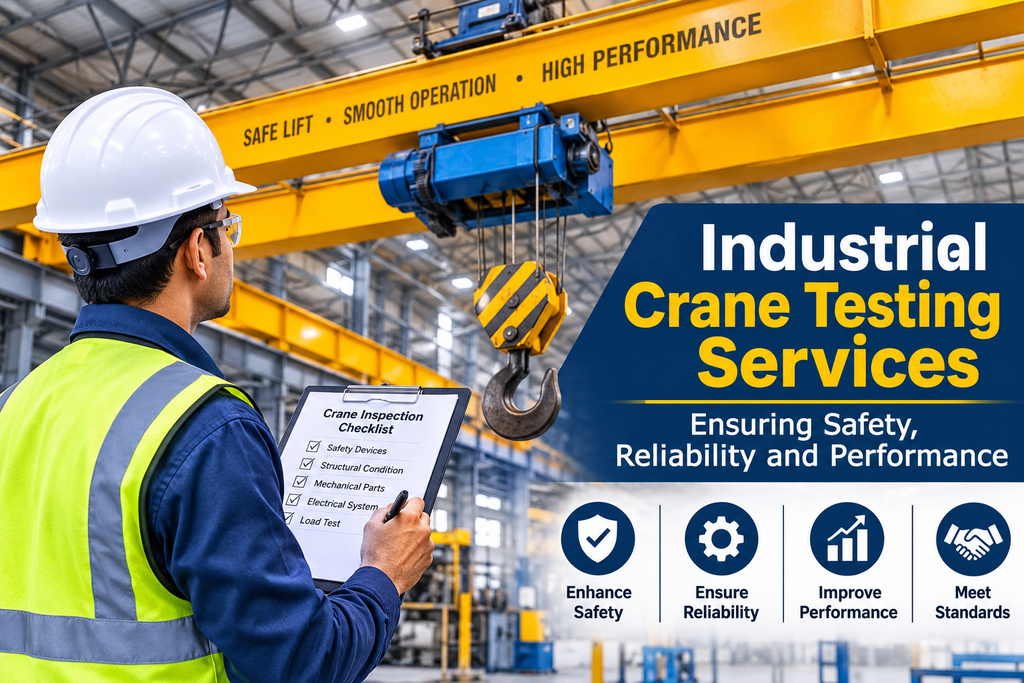
What Are Industrial Crane Testing Services?
Industrial crane testing services involve inspecting, examining, and evaluating cranes to ensure they operate safely and efficiently. These services help identify mechanical problems, structural damage, electrical faults, and other issues that may affect crane performance.
Professional crane testing specialists examine important components, including:
- Crane hooks and lifting attachments
- Wire ropes and chains
- Braking systems
- Motors and gearboxes
- Electrical control panels
- Structural frames and supporting components
- Limit switches and safety devices
- Hoisting and travelling mechanisms
Testing helps determine whether the crane can safely handle its intended working load and perform its lifting operations reliably.
Why Is Industrial Crane Testing Important?
Crane failures can cause serious workplace accidents, equipment damage, production delays, and financial losses. Regular testing helps businesses identify problems before they become major safety risks.
Here are some important benefits of professional crane testing services.
1. Improves Workplace Safety
Workplace safety should always be a priority in industrial environments. Crane testing helps identify damaged components, faulty brakes, and other mechanical problems that could create dangerous situations.
Regular inspections help reduce the risk of accidents and protect workers, operators, and nearby equipment.
2. Ensures Reliable Crane Performance
Industrial operations often depend on cranes for daily material handling. Testing ensures that cranes perform lifting, lowering, and movement operations correctly.
It also helps identify performance issues that may affect production efficiency.
3. Prevents Unexpected Equipment Failures
Unexpected crane breakdowns can interrupt industrial operations and increase maintenance expenses.
Professional testing helps detect early signs of wear, corrosion, structural damage, and mechanical failure. Businesses can address these problems before they lead to expensive repairs.
4. Supports Regulatory Compliance
Industrial cranes must meet applicable safety requirements and inspection procedures. Depending on the crane type and application, businesses may need to follow relevant Indian regulations, applicable standards, and manufacturer recommendations.
Professional crane testing helps maintain inspection records and demonstrate that appropriate safety checks have been completed.
5. Extends Equipment Lifespan
Regular testing and maintenance help prevent excessive wear and damage to important crane components.
Identifying problems early allows businesses to repair or replace damaged parts, improving equipment reliability and extending its useful service life.
Different Types of Industrial Crane Testing
Different cranes require different testing procedures depending on their design, lifting capacity, and operating environment.
Some common types of industrial crane testing include:
1. Load Testing
Load testing evaluates a crane’s ability to lift and handle specified loads under controlled conditions.
During this process, qualified professionals follow the applicable testing procedure and approved load limits. They examine the crane’s stability, lifting mechanism, brakes, and overall performance.
Load testing helps verify that the crane operates safely within its permitted capacity.
2. Structural Inspection
Structural inspection focuses on the physical condition of the crane.
Inspectors examine beams, joints, welds, supporting structures, and other load-bearing components. They look for cracks, corrosion, deformation, and signs of structural weakness.
This inspection is particularly important for cranes operating in demanding industrial environments.
3. Electrical Testing
Electrical systems control several important crane operations. Faulty wiring, damaged connections, or electrical component failures can affect crane safety.
Electrical testing involves examining control panels, wiring, motors, switches, and electrical protection systems.
These checks help ensure reliable crane operation and reduce electrical hazards.
4. Mechanical Testing
Mechanical testing evaluates the condition and performance of moving crane components.
Professionals inspect gearboxes, motors, bearings, brakes, wheels, hoisting systems, and travelling mechanisms.
This process helps identify unusual vibrations, excessive wear, lubrication problems, and mechanical defects.
5. Safety Device Testing
Safety devices protect crane operators and other workers during lifting operations.
Testing may include checking:
- Emergency stop systems
- Overload protection devices
- Limit switches
- Warning alarms
- Braking systems
- Anti-collision systems, where fitted
Properly functioning safety devices help prevent unsafe crane movements and operating conditions.
Industrial Cranes That Require Regular Testing
Different types of industrial cranes support material handling activities across various industries.
Some commonly tested cranes include:
Overhead Cranes: Used in factories and warehouses to lift and move heavy materials across designated working areas.
EOT Cranes: Electric overhead travelling cranes are widely used in manufacturing facilities, workshops, and industrial plants.
Gantry Cranes: Commonly used in construction sites, warehouses, and outdoor industrial facilities.
Tower Cranes: Used in construction projects for lifting heavy building materials to different heights.
Jib Cranes: Suitable for lifting and moving materials within smaller workspaces, production units, and workshops.
Each crane requires suitable inspection and testing procedures based on its configuration, operating conditions, and rated capacity.
The Industrial Crane Testing Process
A systematic testing process helps ensure accurate results and reliable equipment performance.
Here are the major steps involved:
Step 1: Initial Visual Inspection
Inspectors examine the crane’s overall condition and identify visible signs of damage, corrosion, cracks, or abnormal wear.
Step 2: Component Examination
The inspection team checks important mechanical, electrical, and structural components to identify potential defects.
Step 3: Functional Testing
Professionals operate the crane under controlled conditions to examine lifting, lowering, travelling, and braking functions.
Step 4: Load Testing
Where required, qualified personnel conduct load testing according to applicable standards and approved procedures.
Step 5: Safety System Verification
Inspectors check safety devices, emergency controls, limit switches, and overload protection systems.
Step 6: Testing Report and Recommendations
After completing the inspection and testing, professionals prepare a report containing observations, test results, and recommendations for necessary repairs or maintenance.
Businesses should address identified defects before returning affected equipment to service.
How Often Should Industrial Cranes Be Tested?
The testing frequency depends on several factors, including crane type, operating conditions, lifting capacity, usage frequency, and applicable regulatory requirements.
Businesses should consider:
- Manufacturer-recommended inspection schedules.
- Applicable statutory inspection and testing requirements.
- The crane’s operating hours and workload.
- Environmental conditions such as dust, moisture, and corrosion.
- Previous inspection reports and maintenance history.
- Any major repair, modification, or unusual operating incident.
Regular inspections, preventive maintenance, and periodic testing help maintain safe operating conditions.
How to Choose the Right Industrial Crane Testing Service Provider
Selecting an experienced crane testing service provider is important for achieving accurate inspection results and maintaining workplace safety.
Consider these factors before choosing a service provider:
1. Technical Experience: Choose professionals with experience in inspecting and testing different types of industrial cranes.
2. Qualified Inspection Team: Ensure the service provider has appropriately trained and competent personnel.
3. Proper Testing Equipment: Professional testing requires suitable instruments and equipment for accurate evaluation.
4. Knowledge of Safety Standards: Select a provider familiar with applicable crane safety regulations and technical standards.
5. Detailed Documentation: A reliable provider should supply clear inspection reports, test results, and recommendations.
6. Timely Service: Choose a team that can coordinate inspections efficiently and minimize unnecessary operational interruptions.
Conclusion
Industrial crane testing services are essential for maintaining workplace safety, improving equipment performance, and preventing unexpected breakdowns. Regular inspections and testing help businesses identify potential problems, maintain reliable lifting operations, and protect employees and industrial assets.
From load testing and structural inspections to electrical and mechanical examinations, every testing procedure contributes to safer crane operations.
Businesses should work with experienced professionals who understand industrial lifting equipment and applicable safety requirements. Investing in regular crane testing is a practical step towards efficient, safe, and uninterrupted industrial operations.
Frequently Asked Questions (FAQs)
1. What are industrial crane testing services?
Industrial crane testing services involve inspecting and evaluating cranes to verify their safety, functionality, lifting performance, and compliance with applicable requirements.
2. Why is crane load testing necessary?
Crane load testing helps verify the crane’s performance under specified loading conditions and checks important components such as brakes, lifting mechanisms, and structural elements.
3. Which types of cranes require testing?
Overhead cranes, EOT cranes, gantry cranes, tower cranes, and jib cranes require appropriate inspections and testing based on their design and operating conditions.
4. How often should industrial cranes be inspected?
Inspection frequency depends on the crane type, usage, operating environment, manufacturer recommendations, and applicable regulatory requirements.
5. What does a crane testing report include?
A crane testing report generally includes inspection observations, test procedures, load test results where applicable, identified defects, and recommendations for corrective action.
6. Can regular crane testing prevent workplace accidents?
Yes. Regular testing helps identify potential mechanical, electrical, and structural problems before they cause serious accidents or equipment failures.